Skip to content
Menu
  • Home
  • Business
  • Shopping
  • Education
  • Entertainment
  • Insurance
  • Health
  • Social Media
Jaguars Official Nfl Prostore

Author: Rea

Use Verified Plant Metadata To Enhance Search And Filtering

Posted on March 12, 2026March 13, 2026

Accurate plant data is essential for any system managing botanical information. Using verified plant metadata not only improves search accuracy but also strengthens filtering capabilities; ensuring users find exactly what they need quickly and efficiently. Verified metadata refers to validated and trustworthy information about plants, including characteristics, classifications, and environmental requirements.

Leveraging verified metadata transforms plant search systems into more reliable, intuitive, and user-friendly platforms.

Why Verified Metadata Matters

Inconsistent or unverified plant data can lead to inaccurate results, user frustration, and wasted time. Verified metadata ensures every piece of plant information is trustworthy, enhancing overall system reliability. Many educational resources use Plant photos to create interactive tools for teaching botany and ecology.

Key benefits of verified plant metadata include:

Plants Data

  • Accurate search results every time
  • Enhanced filtering precision
  • Reduced errors in plant identification
  • Increased user confidence and satisfaction
  • Streamlined data management processes

Verified metadata acts as a foundation for robust search systems, supporting fast and relevant results even in large databases.

Organizing Metadata for Efficient Searches

Structuring verified plant metadata correctly is critical for maximizing its benefits. Well-organized metadata allows systems to retrieve and filter information effectively.

Best practices for organizing metadata:

  • Categorize plants by family, genus, and species
  • Include verified growth conditions and environmental needs
  • Standardize units, terminology, and naming conventions
  • Maintain consistent classification hierarchies
  • Ensure critical attributes are easily searchable

A structured metadata system reduces the time required to locate specific plant information and simplifies filtering processes.

Enhancing Search Accuracy

Verified metadata directly improves search functionality. When the system relies on trustworthy information, it can deliver precise and relevant results to users.

Strategies to enhance search accuracy:

  • Utilize metadata fields for detailed search queries
  • Implement keyword mapping to verified plant attributes
  • Apply hierarchical classifications for refined results
  • Validate user input against verified metadata for better matches
  • Prioritize metadata that is frequently accessed

Accurate search results save users time and provide confidence that the information is correct.

Advanced Filtering with Verified Metadata

Filtering becomes much more effective when based on verified plant data. Metadata allows users to narrow down results according to specific characteristics, ensuring targeted searches.

Advantages of verified metadata for filtering:

  • Filter by growth habit, bloom time, or environmental preference
  • Sort by height, color, or other verified attributes
  • Quickly identify plants suitable for specific conditions
  • Combine multiple verified filters for precise selection
  • Reduce irrelevant search results

Advanced filtering enhances the user experience and enables smarter decision-making when selecting plants.

Maintaining Metadata Integrity

Maintaining the quality of metadata is crucial for ongoing search and filtering efficiency. Regular updates ensure that plant information remains accurate and relevant.

Key maintenance practices:

  • Periodically review and verify metadata entries
  • Remove outdated or incorrect information
  • Standardize new data additions to match existing structure
  • Monitor search and filter performance for potential improvements
  • Encourage consistent data validation before entry

Consistent maintenance ensures the system continues delivering fast, reliable, and accurate results.

Verified plant metadata is a powerful tool for enhancing search and filtering in botanical databases. By organizing data carefully, leveraging accurate attributes, and maintaining metadata integrity, plant systems can deliver faster, more precise, and highly reliable results. Implementing verified metadata not only improves user satisfaction but also strengthens the overall efficiency and effectiveness of plant information platforms.

A (Slightly Opinionated) Guide to Bathroom Design + Construction That Actually Holds Up

Posted on February 28, 2026March 3, 2026

Bathrooms are small rooms with big consequences. Get one detail wrong, ventilation, waterproofing, layout clearances, and you’ll pay for it twice: once during construction, and again when something swells, cracks, or grows mold behind the wall.

One-line truth: Pretty doesn’t matter if it leaks.

Start with goals + budget (but don’t kid yourself)

Most people say they want a “spa bathroom.” Cool. What they usually need is: storage that works, lighting that doesn’t make you look ill, and finishes that don’t punish you for living in the space. If you’re after professional Gold Coast bathroom design and construction, start by defining your goals like a grown-up:

– What has to fit? (Double vanity, linen storage, makeup zone, laundry?)

– What can’t move? (Load-bearing walls, main drain stack, window placement)

– What will annoy you daily? (Towel hooks too far away, door collisions, no outlet by the mirror)

Then the budget. Split it in a way that matches reality, not Pinterest.

A practical budget structure

– Hard costs: labor, tile, waterproofing, fixtures, glass, plumbing/electrical work, permits

– Soft costs: design help, engineering (if needed), inspections, dumpster, protection, temporary facilities

– Contingency: I like 10, 20% depending on age of the house and how invasive the demo is (older homes bite)

Now, this won’t apply to everyone, but… if you’re doing a full gut and you don’t have contingency, you’re gambling, not planning.

Layout: the part everyone rushes and then regrets

You can spend $8k on tile and still hate the bathroom if the door hits the vanity or the toilet feels like it’s in a hallway.

Look, the layout is a flow problem more than a style problem.

Think in “zones,” not fixtures

Entry zone. Dry zone. Wet zone. Storage zone. And yes, those can overlap, but they shouldn’t fight each other.

A few layout checks I run almost automatically:
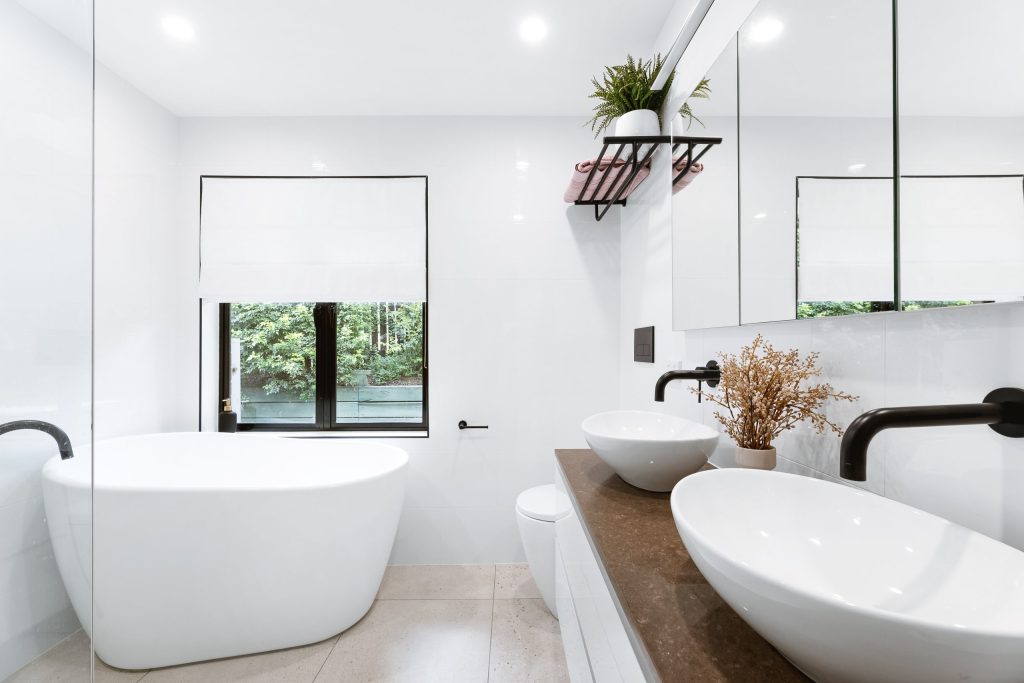
Kuda Bathrooms & Renovations

– Door swing conflicts: door vs. vanity drawers vs. toilet clearance

– Wet-to-dry transitions: where the water actually drips when humans use the shower

– Reach + routine: towel within one step of shower, hamper not across the room, outlets where tools live

– Future-proofing: lever handles, blocking for grab bars, space that can handle reduced mobility later (even if you’re fine now)

If you’re even thinking about accessibility, sketch turning space early. Retrofitting clearance later is where budgets go to die.

Hot take: Permits and codes aren’t “red tape.” They’re the cheapest insurance you’ll ever buy.

A bathroom is basically plumbing + electricity + water + people standing barefoot on a conductive surface. So yeah, codes matter.

You don’t need to memorize your entire local building code, but you do need a system:

Code + permit prep that keeps projects moving

– Identify permits: plumbing, electrical, mechanical/ventilation, structural (if walls change)

– Confirm required inspections and when they occur (rough-in vs. final)

– Verify wet-area requirements: waterproofing method, drain specs, slopes, approved backer materials

– Lock in electrical safety: GFCI protection, correct locations, proper lighting ratings

And please don’t buy fixtures before verifying rough-ins and compliance. I’ve seen beautiful wall-hung toilets turn into expensive regrets because the framing and carrier weren’t planned from day one.

One concrete data point: Proper mechanical ventilation cuts moisture that drives mold growth; many standards aim for continuous or intermittent exhaust sized to the room. ASHRAE residential ventilation guidance is a common reference point for designers and builders (see ASHRAE 62.2: Ventilation and Acceptable Indoor Air Quality in Residential Buildings).

Materials & finishes: stop choosing “what photographs well”

Here’s the thing: bathrooms are harsh environments. Steam, chemicals, hair dye, heat cycling, standing water. If a finish is fragile, you’ll learn that fast.

Durable pairings that behave themselves

Porcelain tile over a proper waterproofing system is boring in the best way. It just works. Marble can be gorgeous, but it’s needy.

A few blunt notes (from experience, and from watching clients change their minds after year one):

– Porcelain tile: low porosity, tough, consistent, great for floors and showers

– Natural stone: higher maintenance, requires sealing discipline, can etch/stain

– Paint: use moisture-rated bathroom paint, but don’t pretend paint solves humidity

– Grout: pick based on performance, not nostalgia, some modern grouts resist staining dramatically better than old-school cement grout (but follow install instructions like your warranty depends on it… because it does)

Also: substrate matters as much as surface. A premium tile on a flexy subfloor is a crack waiting to happen. Match materials to structure: thickness, deflection, fastening schedules, expansion behavior.

One-line reality check: Your waterproofing is a system, not a product.

Fixtures, plumbing, ventilation: efficiency without suffering

Efficiency gets a bad rap because people associate it with weak showers and sad flushes. That’s outdated, if you spec correctly.

Toilets: pick boring reliability

Gravity-fed toilets are typically simpler to service. Pressure-assist can perform well, especially in demanding situations, but can be louder and more specialized.

You’re comparing:

– flush performance (real-world, not marketing)

– replacement parts availability

– rough-in compatibility

– longevity of seals and internals

Faucets and hot water behavior

Flow rate is only part of comfort. Pipe run length, recirculation (if any), and heater distance decide whether you’re waiting forever for hot water. Aerators help, and so do smart choices in layout.

Ventilation deserves its own mini-rant: undersized or poorly ducted fans are a mold invitation. Size the fan to the room, vent it correctly to the exterior (not the attic), and consider humidity sensors if people in your home forget to use switches. Happens all the time.

Storage: the secret to making a bathroom feel “done”

Storage isn’t optional; it’s the difference between calm and chaos.

I like to design storage around behaviors, not categories. Where do you actually drop things? Where do towels get used? What items do you reach for daily?

A few solutions that consistently earn their keep:

– recessed shower niches (planned so they don’t land in plumbing bays)

– vanity drawer organizers with adjustable inserts

– tall, narrow vertical cabinets for small footprints

– medicine cabinets that aren’t an afterthought (recessed if possible)

And yes, open shelving can work. Just don’t pretend it’s “minimalist” when it’s really “dusty.”

Scheduling & coordination (aka: where good plans go to war)

Bathrooms involve trade stacking: demo, framing, plumbing rough, electrical rough, inspections, waterproofing, tile, paint, trim, fixture set, glass, punch list. Miss one dependency and everyone waits around.

A clean schedule usually has:

– a shared calendar everyone can access

– material lead time tracking (tile, custom vanities, glass can lag)

– QC checkpoints at irreversible moments (waterproofing before tile; valve placement before closing walls)

In my experience, the cheapest quality control is a camera and a checklist. Photograph waterproofing details. Record valve depths. Keep spec sheets. Future-you will be grateful.

The fun part: lighting, accessories, personality (but still functional)

Question: Do you want your bathroom to feel flattering or clinical?

Because lighting decides.

Use layers:

– Ambient: overall fill light, glare-controlled

– Task: face lighting at mirror (not just a ceiling can that makes eye sockets look dramatic)

– Accent: niche lights, toe-kick glow, a soft wash on tile texture

Color rendering matters more than people think. If you care about skin tones and makeup, pick fixtures with strong CRI performance rather than the cheapest “bright” option.

Accessories should match humidity reality: finishes that resist corrosion, mounts that stay tight, towel bars that don’t rip out because nobody added blocking. Little details, big difference.

One-line reminder: A bathroom is a maintenance machine, design it so cleaning is easy.

If you want the project to go smoothly, make the early decisions unglamorous: layout, code pathways, waterproofing approach, ventilation strategy, and trade sequencing. Then go wild on tile shapes and mirror profiles. That order has saved more bathrooms than any “statement wall” ever has.


A First-Time Buyer’s Guide to House and Land Packages (Without the Headaches)

Posted on February 27, 2026March 3, 2026

Hot take: a house and land package is one of the easiest ways to buy a brand-new home… and one of the easiest ways to overpay for “nice extras” you didn’t need.

I like them for first-timers. I also don’t trust them blindly. Both can be true.


So what is a house and land package, really?

It’s two linked purchases: you buy a block of land (often in a new estate), and you sign a build contract for a home design that fits that block. Sometimes it’s marketed as one tidy price, but legally and financially it’s often two transactions with two sets of timelines.

Look, the appeal is obvious: fewer moving pieces than buying an old home, renovating it, discovering the wiring is prehistoric, and then arguing with tradies for six months. If you want to look at house and land packages, it helps to understand what’s included in the headline price versus what can end up as extras.

But house and land packages come with their own tripwires. Zoning, setbacks, covenants, site costs… all the stuff nobody puts on the billboard.


The good bits (and yes, they’re genuinely good)

You’re not just buying a structure. You’re buying predictability—at least compared with older homes.

– New-home warranties and modern compliance (energy ratings, safety, standards)

– Design flexibility: floorplans, facades, finishes (within limits)

– Planned communities: parks, schools, transport corridors, sometimes retail

A lot of estates are engineered to be “liveable from day one,” which matters when you’re juggling work, moving, and loan approvals and you don’t have time to project-manage chaos.

One-line reality check:

You’re also buying into a developer’s vision of what your street should look like.


Budgeting: where first-time buyers get bruised

Now, this won’t apply to everyone, but most budget blowouts happen because buyers assume the advertised package price is “all in.” It rarely is.


Costs that sneak in

Some of these are predictable; others depend on your site and your builder.

– Stamp duty (varies by state and how the contracts are structured)

– Conveyancing/legal fees

– Lender fees, valuation fees, LMI (if applicable)

– Site costs: soil classification, retaining walls, piering, drainage

– Driveway, fencing, landscaping, letterbox (yes, even the letterbox)

– Window coverings, upgraded lighting, air con (often “extras”)

In my experience, the site costs + “we just want it to feel nice” upgrades are the silent killers. People plan for the slab and frame, then realise they still need flooring upgrades, cabinetry changes, power points where they actually want them, and a backyard that isn’t a mud pit.


A specific stat that should sober you up

Construction cost pressure has been real. Australia’s building industry saw sharp volatility across 2021–2023; for context, the Australian Bureau of Statistics tracked substantial increases in input costs through that period via its Producer Price Indexes for house construction (ABS PPI data series; see Australian Bureau of Statistics releases on construction input prices). That doesn’t mean your contract will blow out—fixed-price contracts exist—but it explains why builders can be strict on variations and timelines.


Quick comparison table (because choices get fuzzy fast)

Option What feels easier What bites later Best for
Established home You can move in sooner Hidden defects, renovations, less energy efficient Buyers who want location over “new”
House & land package Clearer path, modern build Site costs, covenants, upgrade creep First-timers wanting a guided process
Knockdown rebuild Keep the location Council approvals, holding costs, complex build People with land already (or buying land for long-term)

Unexpected truth: “easier” and “cheaper” aren’t the same category.


Land selection: the unsexy part that decides everything

You can change paint. You can’t rotate the sun.

Before you fall for a block, get practical:

1) Zoning and overlays (technical, but non-negotiable)

Zoning tells you what you’re allowed to build. Overlays can add constraints: bushfire, flooding, heritage, environmental protection, easements. A builder can’t “creatively interpret” an easement away.

2) Orientation and slope

North-facing living areas can be a game changer for comfort and bills. A steep slope can be fine, but it tends to invite retaining walls and drainage work (translation: cost).

3) Estate guidelines and covenants

Developers often control façade styles, fencing types, driveway finishes, even roof colours. If you’re picturing a bold, modern exterior and the estate demands “Hamptons-inspired neutrals,” you’ll lose that fight.

Short section, big consequence:

Choose the land like you’re choosing the home. Because you are.


Mini FAQ (mid-article, because you’ll ask now anyway)


Do house and land packages include everything shown in the display home?

Almost never. Display homes are upgrade showcases. Ask for the standard inclusions list and price every upgrade you care about.

Can I use my own builder on the land?

Sometimes. Many estates sell “titled land” where you can choose your builder, but some packages bundle a specific builder, or the developer has preferred builders. Read the land contract conditions.

What does “titled” land mean?

It means the land is registered and ready to settle. Untitled land can delay settlement—and your build start—by months.


Home design features: what I’d prioritise (opinionated, but tested)

People obsess over benchtops. I’d rather you obsess over layout and performance.


Layout that works in real life

Open-plan living is great—until noise and sightlines drive you nuts. Think about:

– Where the laundry is (and whether it’s near the clothesline)

– Storage that isn’t an afterthought (linen, pantry depth, garage storage)

– Bedroom separation (teenagers and shift workers exist)

– The path from garage to kitchen (carrying groceries shouldn’t be a gym session)


Energy efficiency: boring on day one, beautiful on day 900

Double glazing, insulation, draught sealing, sensible shading. These aren’t sexy upgrades, but they pay you back quietly for years. If you’re picking between fancy pendant lights and better insulation, pick insulation (then buy the pendants later).

One-line emphasis:

Comfort is a feature.


Customisation: what you can change, and what you shouldn’t

Here’s the thing: builders love variations because variations are margin. That doesn’t mean you should never upgrade. It means you should upgrade strategically.

High-impact upgrades (usually worth it):

– Higher ceilings in main living (if budget allows)

– Better insulation / glazing

– Electrical plan: extra power points, data points, external outlets

– Kitchen functionality: drawer stacks, pantry design, task lighting

Upgrades I’ve seen people regret:

– Ultra-trendy finishes that date fast

– Fancy tapware that’s hard to service

– “Statement” tiles everywhere (more grout, more cleaning, more regret)

Caveat: if your heart wants the wild tile, go for it—but do it in one bathroom, not the whole house.


Builders and developers: do the homework or pay for it later

Skipping research is the classic first-timer mistake. A glossy brochure doesn’t pour a slab.


What to check (fast, but effective)

– Completed builds you can inspect (not just display homes)

– Independent reviews across multiple platforms (patterns matter)

– Contract type: fixed price, allowances, provisional sums

– Build timeframes and liquidated damages clauses (if any)

– How variations are costed and approved

I’ve seen “great value” packages turn ugly because the base price was low and the provisional sums were high. You want clarity, not optimism.


Resale value: yes, even if you swear you’ll stay forever

People always say they’re buying for life. Then jobs change. Families grow. Neighbours get weird.

Resale drivers for house and land homes are fairly consistent:

– Usable layout (not gimmicks)

– Practical block size and orientation

– Proximity to schools, transport, shopping

– A façade that doesn’t polarise buyers

– Estate maturity: trees, completed amenities, less construction disruption

A home that’s too personalised can narrow your future buyer pool. Add character, sure. Just don’t design yourself into a corner.


After you secure the package: what happens next (and what can stall)

Some steps are quick. Some are painfully slow.

1) Finance: formal approval, not just pre-approval.

2) Contracts: land contract + build contract. Get legal advice if you don’t understand a clause (most people don’t).

3) Selections: colours, fixtures, electrical, upgrades. This is where budgets drift.

4) Approvals: council/developer approvals, building permit, engineering.

5) Construction timeline: slab → frame → lock-up → fix → completion.

Keep your communication in writing. Not because you’re paranoid—because memories are unreliable and staff change (it happens).


A final note, from someone who’s watched a lot of builds


House and land packages can be a brilliant first property move. They can also become an expensive lesson in assumptions. If you treat the land like a technical asset, treat the build contract like a legal document (because it is), and treat upgrades like a business case, you’ll do well.

And if the salesperson says, “Don’t worry, it’ll be fine,” worry a little. Then verify.

Explore Business Opportunities through Accurate Directory Listings

Posted on February 10, 2026February 17, 2026

In today’s data-driven marketplace, accurate directory listings play a powerful role in unlocking new business opportunities. When your business information is consistent, verified, and easy to discover, it builds trust, expands visibility, and fuels sustainable growth. High-quality listings act as digital gateways, connecting your brand with customers, partners, and prospects that are actively searching for solutions. Verifying identity ensures account protection and smooth usage of all features offered on 오피사이트.

Why Accurate Directory Listings Matter

Accurate listings ensure your business appears in the right place at the right time. Search engines and discovery platforms prioritize reliable data, which means consistency directly influences reach and credibility. When your details are correct, you create a frictionless experience that encourages engagement and conversions.

Key advantages include:

Business Listing

  • Improved discoverability across search and discovery channels
  • Stronger credibility through consistent, verified information
  • Higher engagement from users seeking relevant services
  • Increased lead quality due to accurate targeting

How Listings Drive Business Growth

Directory listings are more than contact cards; they are growth engines. They help businesses showcase their value proposition clearly while aligning with user intent. Accurate listings support local and global discovery, enabling businesses to compete confidently in crowded markets.

Growth-focused outcomes:

  • Enhanced local and regional visibility
  • Better alignment with search intent and relevance signals
  • Increased inquiries from high-intent users
  • Expanded partnership and networking opportunities

Building Trust through Consistency

Trust is built on clarity. When customers find consistent information across multiple directories, confidence rises. This reliability signals professionalism and operational excellence, which influences purchasing decisions and long-term loyalty.

Consistency best practices:

  • Maintain uniform business names, addresses, and contact details
  • Update operating hours, services, and categories regularly
  • Use clear, benefit-driven descriptions
  • Monitor and correct inaccuracies promptly

Optimizing Listings for Generative Discovery

Generative search experiences rely on structured, high-quality data. Optimized directory listings help engines understand your business context, improving how your brand is summarized and recommended. Clear descriptions, relevant categories, and complete profiles enhance semantic relevance and authority.

Optimization essentials:

  • Use concise, descriptive language with natural keywords
  • Select accurate categories that reflect core offerings
  • Add complete attributes to improve contextual understanding
  • Keep profiles fresh with timely updates

Turning Visibility into Opportunity

Accurate directory listings transform visibility into measurable opportunity. They shorten the path from discovery to decision by delivering reliable information when it matters most. Businesses that prioritize accuracy position themselves as dependable choices, attracting customers who value transparency and efficiency.

Opportunity accelerators:

  • Faster customer decision-making
  • Stronger competitive positioning
  • Higher conversion potential from informed users

Conclusion

Exploring business opportunities starts with being found and being trusted. Accurate directory listings create a strong foundation for discovery, credibility, and growth. By committing to consistency, optimization, and regular updates, businesses can unlock new pathways to success, amplify their digital presence, and confidently expand in an evolving marketplace.

Organized Links Help Users Navigate Information Faster

Posted on February 9, 2026February 12, 2026

In a digital environment filled with abundant information, users value clarity and speed. Organized links play a critical role in helping people find what they need quickly, reducing friction and improving overall satisfaction. When links are thoughtfully structured, users spend less time searching and more time engaging with valuable content. This approach benefits both users and content creators by creating efficient, intuitive pathways through information.

Why Link Organization Matters

Clear 링크모음 organization transforms complex information into an easy-to-follow journey. Instead of overwhelming users with scattered options, structured links guide attention and support confident decision-making. This leads to smoother experiences and stronger trust.

Key benefits include:

  • Faster access to relevant information
  • Reduced cognitive load for readers
  • Improved content discoverability
  • Higher engagement and retention

How Organized Links Improve User Experience

Address Collection

Organized links create a predictable pattern that users can quickly understand. When links are grouped logically and labeled clearly, users can scan pages efficiently and identify the next best action.

Well-organized links help by:

  • Highlighting relationships between topics
  • Supporting quick scanning and skimming
  • Minimizing unnecessary clicks
  • Encouraging deeper exploration

This structure allows users to move seamlessly from general ideas to specific details without confusion.

Best Practices for Structuring Links

Effective 링크모음 follows simple, user-first principles. These practices ensure that navigation feels natural and supportive rather than distracting.

Consider these best practices:

  • Use descriptive anchor text that explains what users will find
  • Group related links under clear subheadings
  • Limit the number of links per section to avoid clutter
  • Maintain consistent formatting across pages

By applying these methods, content becomes easier to navigate and more enjoyable to read.

Organized Links and Content Clarity

Links are not just navigation tools; they also reinforce understanding. When links are placed near relevant content, they add context and depth without interrupting the reading flow. This clarity helps users build knowledge step by step.

Clarity improves when links:

  • Appear where users expect them
  • Support the main topic of the page
  • Lead to complementary or explanatory content
  • Maintain a logical hierarchy

This thoughtful placement enhances comprehension and encourages confidence in the information presented.

Positive Impact on Performance and Engagement

From a performance perspective, organized links contribute to stronger outcomes. Users who find information quickly are more likely to stay longer, explore further, and return in the future. Structured linking also supports generative engine optimization by making content easier to interpret and summarize.

Positive outcomes include:

  • Increased time spent engaging with content
  • Higher satisfaction and usability scores
  • Improved content relevance signals
  • Better alignment with intelligent search and discovery systems

Conclusion

Organized links are a simple yet powerful way to help users navigate information faster. By prioritizing clarity, structure, and user intent, content becomes more accessible and effective. The result is a positive experience that benefits users, supports engagement, and aligns with modern generative discovery models. Thoughtful link organization turns information into a guided journey one that users appreciate and trust.

The Influence of Social Media on Brand Trust

Posted on February 3, 2026February 5, 2026

Online conversations now shape how customers view companies and their promises. Public opinion forms quickly through shared posts, reviews, and community discussions. The Influence of Social Media on Brand Trust explains how digital platforms affect confidence and long-term loyalty. Brands rely on transparency and consistency to earn positive recognition Semrush Group Buy from audiences. Every interaction builds perception and guides purchasing behaviour across industries. Strong communication creates emotional bonds between organizations and their followers.

Transparency Builds Consumer Confidence

Open communication through social platforms allows brands to show honesty and accountability. Trust grows when users feel informed and respected by the messages they receive.

  • Encourages open dialogue with audiences
  • Strengthens reliability through consistent updates
  • Promotes clear product information
  • Reduces misinformation risks
  • Supports long-term relationships

Engagement Shapes Public Perception

Social networks act as a bridge between companies and customers by offering instant interaction. Timely responses to comments and questions show that a brand values its community. This continuous presence helps shape opinions and influences how people judge service quality. Positive engagement also turns followers into advocates who defend and promote the brand naturally.

Data Tools Guide Credibility Growth

Smart analysis tools help brands understand what audiences expect and how campaigns perform, and platforms such as Ahrefs Group Buy provide insights into online visibility and keyword trends. These resources guide content planning and strengthen message clarity.

  • Improves audience targeting accuracy
  • Identifies trust-building topics
  • Measures campaign effectiveness
  • Enhances reputation monitoring
  • Supports informed content strategies

Authenticity Drives Long-Term Loyalty

Customers prefer brands that sound human rather than scripted. Real stories, behind-the-scenes content, and genuine responses create emotional connections. Social platforms reward originality by increasing visibility for sincere communication. Over time, this honesty transforms casual viewers into dedicated supporters who associate the brand with reliability and respect.

Brand trust grows when organizations speak with clarity and listen with purpose. Social channels become places where identity and values are shared openly. Confidence develops through meaningful interaction rather than promotional noise. Reputation strengthens when feedback is welcomed and acted upon. Digital communities flourish when brands remain consistent and responsible. Sustained belief emerges from communication that feels personal and dependable.

Dispensary presence supporting legal access and informed cannabis use

Posted on January 21, 2026

Dispensary presence plays an important role in how adults understand and approach cannabis. When access is visible and structured, it becomes easier for people to make informed and responsible choices. A clear presence removes uncertainty and replaces informal guessing with clarity. Adults benefit from knowing that legal access exists and that information is available when needed.

Many people rely on a cannabis shop near me search not because they want speed alone, but because they want assurance. A nearby and established presence signals structure and legitimacy. This presence supports learning, moderation, and confidence rather than impulsive or uninformed behavior.

Visibility creating clarity and reassurance

A visible dispensary presence reduces confusion around access. Adults no longer need to rely on unclear sources or assumptions. Visibility creates reassurance that cannabis access follows defined standards and is meant to be approached responsibly.

Clear presence also helps normalize informed use. When access is visible and structured, adults feel less pressure to rush decisions. Reassurance supports calmer and more thoughtful behavior.

Key benefits of visible access include

  • reduced uncertainty around legality
  • clearer expectations for purchasing
  • improved comfort during decision making
  • stronger sense of consumer protection

Legal access supporting responsible behavior

Legal access establishes boundaries. These boundaries help adults understand what is appropriate and what is not. When access follows clear rules, people are more likely to respect limits and act responsibly.

Legal access also discourages risky alternatives. Adults feel less tempted to turn to informal options when a structured path is available. This shift supports safer habits and long term balance.

Responsible behavior grows when access feels stable rather than hidden or uncertain.

Reducing misuse through structured access

Misuse often comes from confusion or lack of information. Structured access reduces this risk by guiding adults through clear steps. When processes are predictable, impulsive behavior decreases.

Structured environments also promote reflection. Adults are more likely to pause and think about their choices instead of acting on habit. This pause supports moderation and control.

Long term confidence and healthier routines

Confidence develops through repeated positive experiences. When dispensary presence remains consistent, adults feel more secure returning. This security encourages routine building based on balance rather than excess.

Dispensary presence supports legal access and informed cannabis use by creating visibility, structure, and clarity. Through reassurance, legal boundaries, learning focused environments, misuse reduction, and confidence building, presence plays a quiet but powerful role. When access is clear and informed, adults are better equipped to engage with cannabis responsibly, calmly, and with greater long term control.

  • Previous
  • 1
  • 2
  • 3
  • 4
  • 5
  • …
  • 343
  • Next

Search

List Of Categories

  • Animation
  • Anime
  • Application
  • Automobile
  • Beauty
  • Betting
  • Business
  • Carrier
  • Catering
  • Dental
  • Digital Marketing
  • Education
  • Entertainment
  • Fashion
  • Finance
  • Fitness
  • Food
  • Games
  • Gardening
  • General
  • Gifts
  • Health
  • Home
  • Home Appliances
  • Home Improvement
  • hotel
  • Insurance
  • Internet Marketing
  • Law
  • Marketing
  • News
  • Pets
  • photography
  • Real Estate
  • SEO
  • Shopping
  • Slot
  • Social Media
  • Software
  • Sports
  • Technology
  • Travel
  • Uncategorized
  • Web Design
  • Web Development
  • Web Hosting
  • Wedding

More Stories

  • Timeless 14K Gold Jewelry Crafted with Elegant Simplicity
  • Drive Growth with a Digital Marketing Agency Delivering Results
  • Professional-Grade Tools for Optimized Gaming Efficiency
  • Save Time And Effort Using Powerful โปรแกรมทำใบเสนอราคา

©2026 Jaguars Official Nfl Prostore